
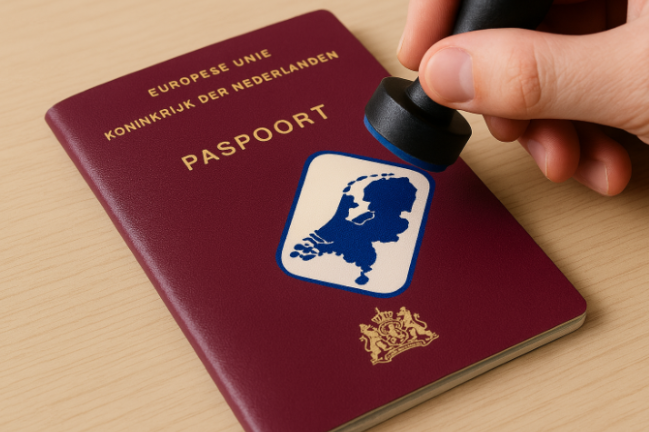
EES Explained: What the End of Passport Stamps Means for Knowledge Migrant Employers
As of 10 April 2026, the Netherlands and the rest of the Schengen Area have fully replaced physical passport stamps with the European Entry/Exit System (EES) — a digital, biometric record of every border crossing. It’s presented as a security and efficiency upgrade. For employers of knowledge migrants, it’s also something else: a system with no margin for error, no visible proof for the employee, and no human being to explain a discrepancy before it becomes a problem.
This matters most for companies that employ highly skilled migrants through payroll or Employer of Record structures, particularly where the end client is not itself an IND-recognised sponsor. If that’s your situation, here’s what’s changed, where the risk actually sits, and what to do about it.
What EES Actually Does
EES is a central European database that digitally logs every entry and exit of non-EU nationals crossing into the Schengen Area for a short stay. At each crossing, it records:
- Passport details
- Date and location of entry and exit
- Facial image and fingerprints
It also automatically calculates whether a traveller has exceeded the permitted 90 days within any rolling 180-day period — a calculation that used to rely on a human border officer counting stamps in a passport.
Why This Changes the Risk Picture for Migrants
There’s no visible proof of entry anymore. A passport stamp used to be tangible evidence — something a migrant could point to when establishing an employment start date, a transition from short stay to a residence permit, or the timeline in an audit. Under EES, that record exists, but only the authorities can see it. The migrant has no independent way to confirm it’s correct. That shifts the burden almost entirely onto getting the paperwork right the first time.
Status transitions are a particular pressure point. Many knowledge migrants enter the Netherlands visa-free or on a short-stay basis, then transition to a Highly Skilled Migrant residence permit. EES tracks border crossings — it does not automatically track that status change. If the timing between “entered as a short-stay visitor” and “now holds an HSM permit” isn’t cleanly documented, the system can flag what looks like an overstay, triggering follow-up questions from the IND or delays in a permit renewal, even when the migrant’s stay was fully lawful throughout.
Why This Changes the Risk Picture for Employers
The system doesn’t allow for context. A human border officer could once ask a question, note an exception, or exercise judgment. EES is automated: it flags a mismatch the moment it sees one, with no built-in step for “let me explain.” For employers, that means administrative slip-ups that used to be minor now carry real weight, and there’s less room to resolve them informally after the fact.
Payroll structures at non-recognised sponsors have less margin for error here. If you’re placing a knowledge migrant on payroll for a startup, scale-up, or any organisation that isn’t itself an IND-recognised sponsor, this is worth taking seriously — not because EES data feeds directly into a sponsor-licence review, but because a clean, well-documented immigration timeline is what used to buy time to sort out a discrepancy informally. Under EES, that informal cushion is gone: a mismatch is flagged automatically, and it’s the documentation on file — not a conversation with a border officer — that determines how smoothly it gets resolved. Get the paperwork right, and this stays a non-issue. Get it wrong, and there’s less room to fix it after the fact.
The Privacy Angle Employers Often Miss
EES falls under EU data protection law, but in practice, migrants don’t have real-time access to their own records, and correction procedures are slow. For employees who travel frequently — regular business trips, multiple short stays across different Schengen countries — one incorrect data point can compound quickly, and the person affected may not even know it’s happened until it surfaces at a permit renewal or an audit.
What Employers and Payroll Providers Should Do Now
- Track travel movements actively rather than relying on the employee to flag issues
- Set and enforce clear employment start dates that match documented entry dates
- Keep thorough records of entry dates, permit status, and every IND decision
- Align your immigration timeline with your payroll timeline — don’t let the two drift apart
- Work with a partner who understands both immigration and employment law, not just one or the other
The Bottom Line
EES looks like a technical upgrade to border control. For companies supporting knowledge migrants without an IND-recognised sponsor licence of their own, it’s really a shift in who carries the risk when something doesn’t line up — and how much room there is to fix it before it becomes a problem. Where a border officer once had discretion, the system now just checks the data. That makes accurate, well-timed documentation more important than it’s ever been.
Recent Comments